WORKS
Microsoft - MAI
Envisioning the future of search architecture
Category: Software
Delivery: Desktop & Mobile
Role: Service Audit / Content Strategy / Innovation Design Thinking
2025
BACKGROUND
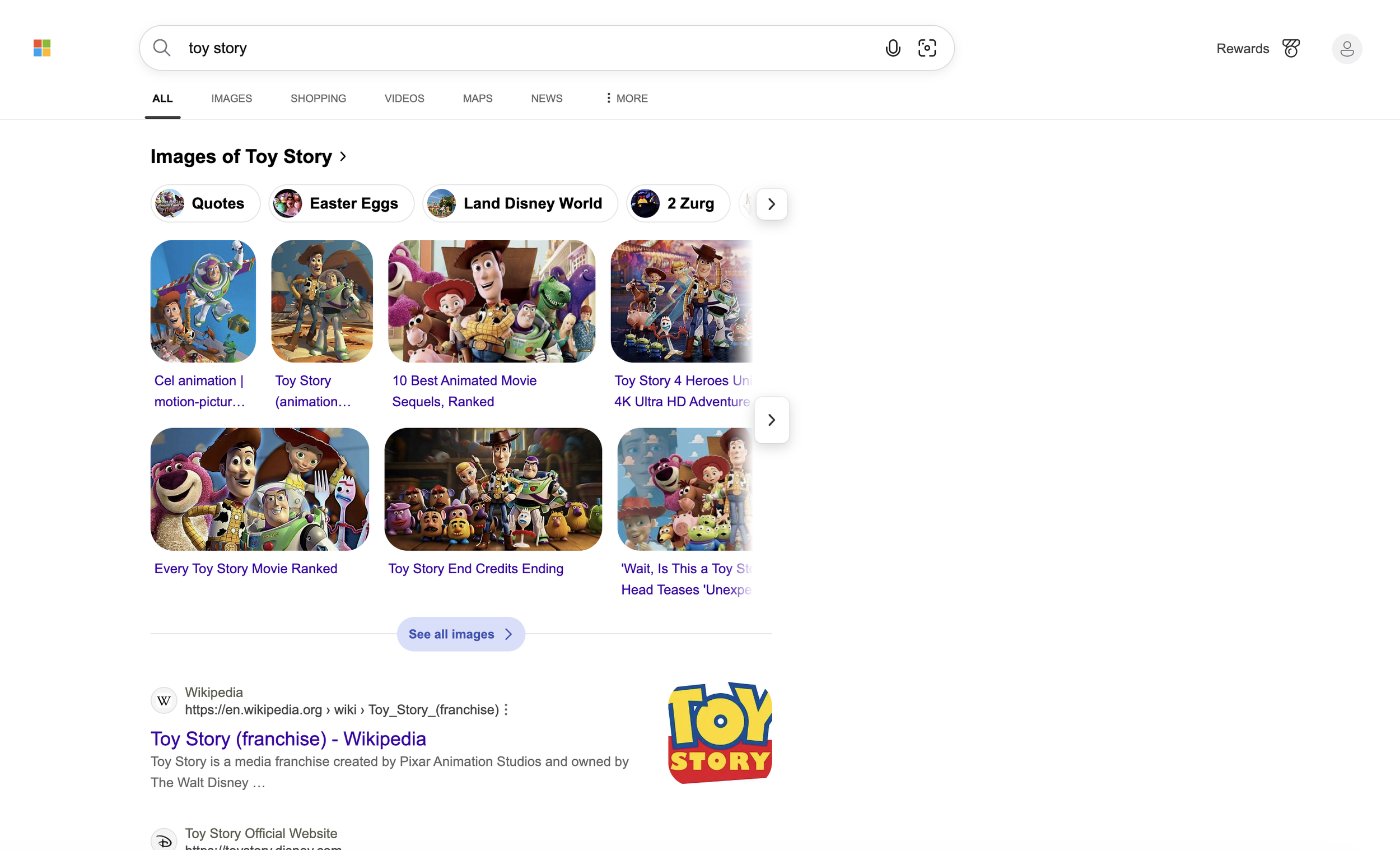
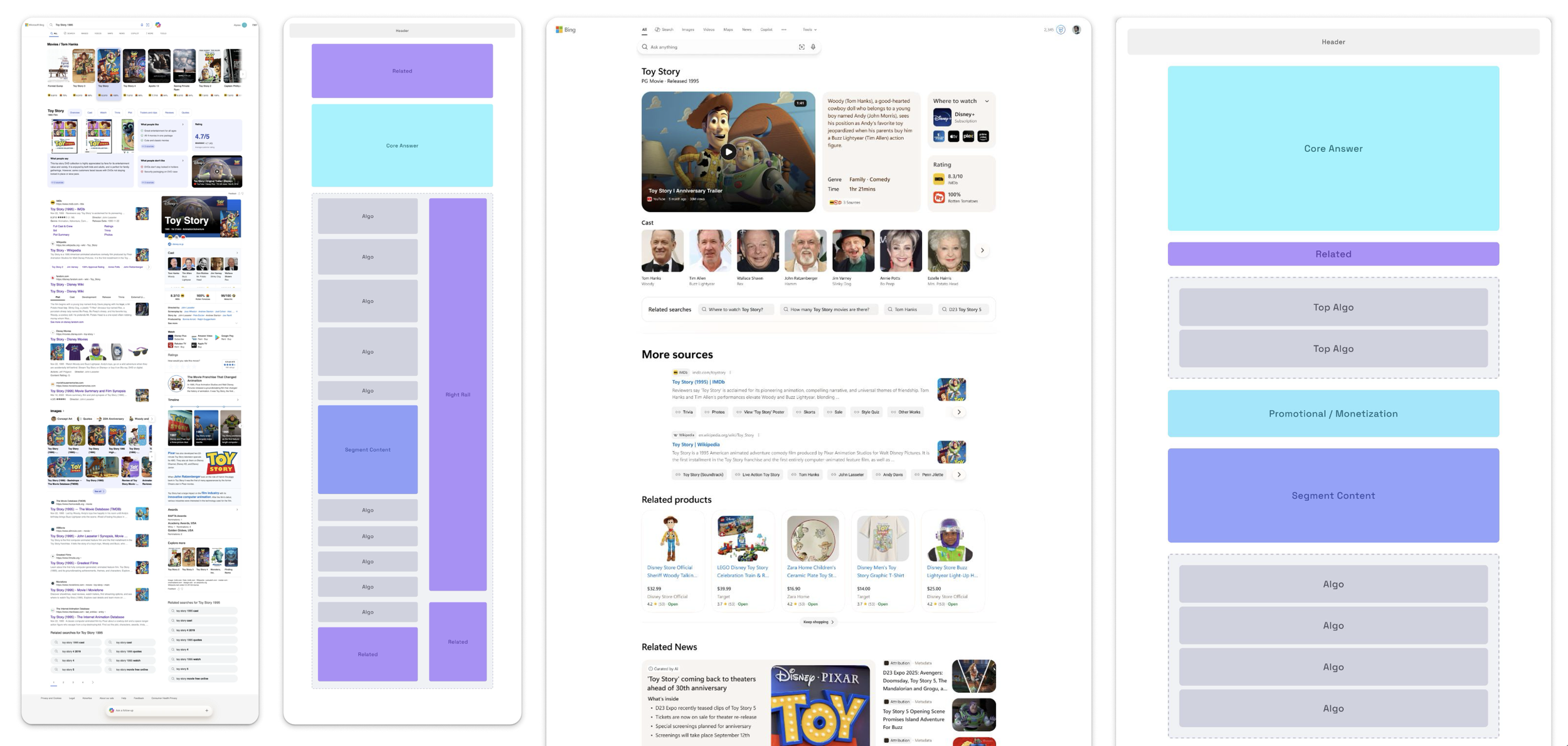
This project involved a systematic audit across Bing’s core segments. I treated it as both interaction research and content strategy: breaking full results pages down into individual “answer slices” to examine each unit in isolation. For every slice, I cataloged design variants, inconsistencies, component usage, tone of voice, and content hierarchy to understand how the system was signaling (or undermining) authority and reliability.
HUMAN TRUTH
At the time of my audit, I saw Bing users struggling with inconsistent answer layouts, uneven information density, sporadic “AI-powered” answers, and unpredictable content responses. Within a single session, people often had to filter through cluttered content and repeatedly adjust their query just to get a stable, trustworthy result. For linked experiences and answer cards, Bing was effectively shape-shifting: similar intents produced dozens of different card designs, patterns, and tones.
That inconsistency doesn’t just create friction, it erodes users’ confidence in what they’re seeing and whether Bing understands them.
CONTRIBUTIONS
This audit became the foundation for future migration and consolidation efforts. The analysis I drove surfaced where we could normalize answer types, align content patterns around clearer promises, reduce redundant or conflicting treatments, and move toward a more coherent search architecture that helps users recognize, interpret, and ultimately trust Bing’s answers.


LOCKED
This work is exploratory and confidential. If you’re interested in learning more, please reach out below!